
The Complete Bathroom Buying Guide: Everything You Need to Know Before Renovating
A new bathroom is one of the few home improvements you live with every single day, so it is worth getting right. Yet most of the problems we are called out to fix in Sheffield homes did not start with the tiling or the taps. They started weeks earlier, with a budget that was too tight, a layout that ignored the existing pipework, or a suite bought before anyone had measured the room. This complete bathroom buying guide is written to help you avoid all of that. It takes you through every decision in a bathroom renovation, in the order you will actually face it, so that by the time the first tile is cut you already know exactly what you are getting and what it will cost.
We have put this together from years of designing, supplying and fitting bathrooms across South Yorkshire from our Sheffield bathroom showroom in Swallownest. We are a Which? Trusted Trader and Gas Safe registered, and the advice below is the same we would give a neighbour, whether you buy a single tap from us or a full fitted bathroom.
First, decide what the room has to do
Before you look at a single product, be honest about how the bathroom is used. A family bathroom shared by three children in the morning has to earn its keep in a way a quiet en-suite never will. Think about who uses the space, at what time of day, and what frustrates you about the current room. Not enough storage? Nowhere to sit? A shower that dribbles?
Write down the handful of things the new bathroom absolutely must solve, then separate those from the things you would simply like. That short list becomes your reference point for every later choice, and it is the quickest way to stop a budget drifting. If accessibility is a consideration now or in the near future, flag it at this stage too. Designing in a level-access shower or a sturdier wall for grab rails from the outset costs a fraction of adding them later.
Setting a budget that survives contact with reality
Money is the question everyone wants answered first, so here is a straight answer. In 2026, a standard family bathroom of around six to eight square metres, fully fitted, typically costs between £5,500 and £8,500. A straightforward refresh, where you swap the suite without moving anything, starts nearer £2,500 to £4,500. A larger project with a wet room or high-end fittings runs from £10,000 upwards, and it is easy to spend £15,000 or more once premium tiling and brassware are involved.
Two figures are worth understanding because they explain a lot of bathroom renovation quotes. Labour usually accounts for 45 to 55 per cent of the total, which is higher than a kitchen, and the reason is tiling: it is skilled, slow work. Location matters as well, with London prices running roughly 15 to 30 per cent above the rest of the country.
Here in Sheffield the sums are kinder. Local bathroom fitters typically charge somewhere between £2,441 and £6,358 for a full job, with the average landing around £4,112, and day rates for tradespeople run from roughly £160 to £315, averaging about £225 and sitting comfortably below the London figure. Most local installs take five to ten working days on site. Whatever number you settle on, hold back at least ten per cent as a contingency. When an old suite comes out, tired pipework and the odd patch of damp have a habit of appearing, and you want that covered rather than blowing the budget.
All the figures above are 2026 guide estimates rather than fixed quotes. Every bathroom is different, and the only way to know your real cost is a proper measure and a written quotation.

Planning the layout around what you cannot easily move
The most expensive mistake in any bathroom is moving things that did not need to move. The single biggest constraint is the soil pipe, the large waste pipe that carries everything away from the toilet. Its position largely dictates where the toilet can go, and relocating it means lifting floors and serious plumbing. Wherever possible, plan around it rather than against it.
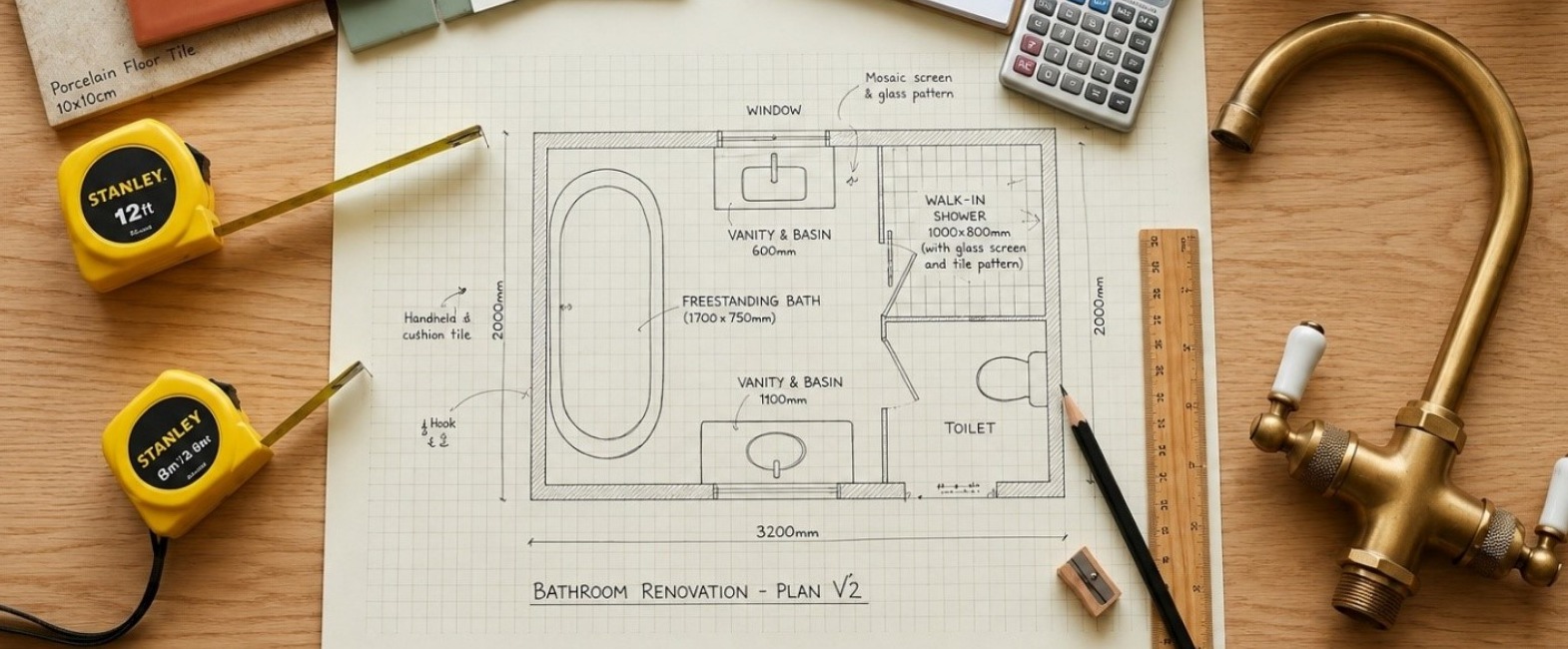
Sketch the room to scale, mark the window, the door and the way it swings, then work the fittings around them, leaving genuine elbow room at the basin and in front of the loo. If the room is tight, small moves make a real difference, and it is a subject worth its own read in our guide to making a small bathroom feel bigger. This is also the moment to book a proper measure. In our experience, a professional survey catches the awkward alcove or the out-of-square wall that would otherwise turn up as a nasty surprise on fitting day.
Choosing a style you will still like in ten years
With the practical bones in place, the enjoyable part begins. The first fork in the road is modern or traditional. Modern schemes lean on clean lines, wall-hung units and minimalist brassware, while traditional bathrooms bring warmth through period detail, roll-top baths and classic fittings. Neither is right or wrong, but committing to one keeps the room coherent, and our comparison of modern and traditional bathrooms is a good place to weigh them up.
If you want the room to feel current without dating quickly, the 2026 mood is warmer than the cool grey decade we have just left. Earthy tones such as clay, warm stone and soft olive are replacing hard whites and greys, textured and patterned tiling is being used to make a feature wall, and the overall feel is calmer and more spa-like. You do not have to chase every trend; pick one or two ideas that suit your home and let the rest be timeless. Our project gallery is full of finished Sheffield bathrooms if you want to see how these choices look in real rooms rather than showrooms.
Suites, showers and the fittings that matter
A bathroom suite is simply the core set of pieces that work together, usually a toilet, a basin and either a bath or a shower. The first real decision is what to build the room around.
A bath still earns its place in a family home and tends to help at resale. A shower enclosure suits anyone who never uses a bath and prefers a defined, easy-to-clean cubicle; brands such as Merlyn do this well. A wet room, where the whole floor is waterproofed, and the shower is open, makes a small space feel larger and is the easiest of all to step into, though it depends entirely on proper tanking and a low-profile tray like those from Acquabella. If you are torn between keeping a bath and going open-plan, our guide to converting a bath to a walk-in shower walks through the trade-offs.
A question we are asked constantly is whether it is cheaper to buy a matched suite or the pieces separately. A coordinated suite is usually better value and guarantees everything sits together, whereas buying separately gives you freedom but asks more of your eye. Wherever you land, it pays to spend a little more where your hands land every day. A statement bath from BC Designs, brassware from Vado or Grohe, and a quality ceramic such as Roca will outlast a cheaper equivalent by years, which is exactly why spending a little more on quality so often works out cheaper in the long run.
Tiles, flooring and wall panels
Surfaces set the whole tone of a bathroom, and they take the most punishment, so choose for wear as well as looks. Porcelain is the reliable workhorse: hard, water-resistant and available in almost any finish, from marble to concrete. Ceramic is a softer, more affordable option for walls. Our note on porcelain tiles covers the practical differences.
For floors, put slip resistance first, then looks. And if the thought of scrubbing grout fills you with dread, waterproof wall panels are worth a serious look. Large-format boards such as Nuance by Bushboard go up faster than tiles, with barely any joints to clean, which makes them a favourite for showers and wet rooms.
Heating, lighting and ventilation
These are the details that separate a bathroom that photographs well from one that is genuinely pleasant to use on a cold Sheffield morning. Underfloor heating gives gentle, even warmth and frees up wall space, and it is far more affordable than most people assume. A heated towel rail earns its keep too, adding useful warmth alongside dry towels; Tissino do a handsome range. Plan lighting in layers, using fittings with the correct IP rating for each zone around water, and consider a demisting mirror from a maker like HiB. Finally, do not skimp on ventilation. A good extractor, ideally one that senses humidity and runs only when needed, is the cheapest protection you can buy against mould and peeling paint.
The parts nobody photographs, but every professional gets right
This is where a good fitter earns their fee, and where the cheapest quote often turns into the dearest job.
Start with the rules. A like-for-like refit usually needs no building regulations approval, but the moment you add or move plumbing or drainage, or carry out electrical work, regulations apply. Bathroom electrics in particular fall under Part P and must be done by a competent, registered person. This is not box-ticking; it is what keeps your home safe and your insurance valid.
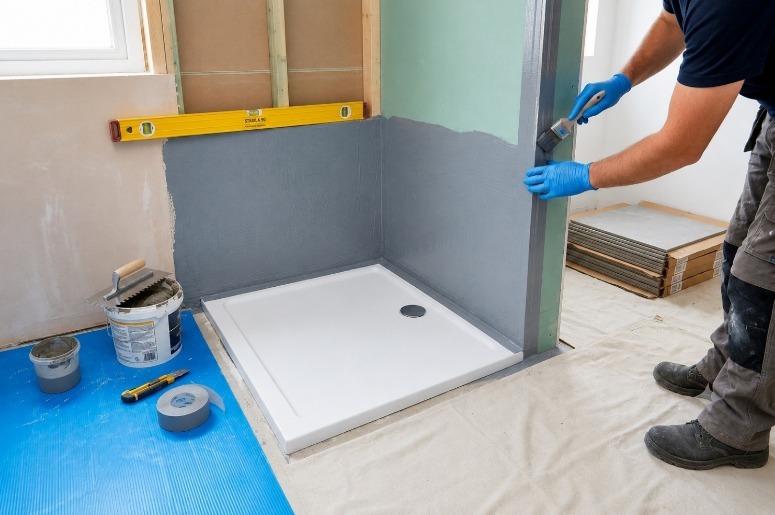
Then there is tanking, and if you remember one thing from this guide, remember this. Tanking is the waterproof layer applied to walls and floors in the wet areas before any tile goes on. It is the most important hidden step in the entire job, because once the tiles are down it can never be seen or checked again. Skimp on it and water works its way into the structure for years, unnoticed, until a ceiling stain downstairs gives it away. Do it properly, and the bathroom simply lasts. It is precisely the kind of step a rushed or unqualified fitter cuts, which is why who installs your bathroom matters every bit as much as what goes into it.
Supply only, or supply and fit?
There are two ways to buy a bathroom. Supply only means you buy the products and arrange your own installation, which works well if you already have a trusted tradesperson. Supply and fit means one team designs, supplies and installs the lot, coordinating plumbing, plastering, tiling and electrics so you are not left project-managing four different trades. We offer both, and our We Fit service handles the whole job from design to the final bead of sealant, including the electrical work that larger suppliers often leave you to organise yourself. If you have ever wondered why buying from a showroom beats an online basket, this joined-up service is the heart of it.
However you buy, vet your fitter properly. Get at least three quotes and treat an unusually cheap one with suspicion, because it almost always shows later. Check credentials: Which? Trusted Trader status, Gas Safe registration and public liability insurance are the ones that matter, and any good firm will show them gladly. Ask what is included, who does the tiling and the electrics, and what guarantee you will get, most reputable Sheffield fitters back their work for at least twelve months. Reading a company's customer reviews tells you plenty about how the job will actually feel.
What to expect once work begins
So how long does it take to fit a bathroom? On site, most installations take two to four weeks, and a typical Sheffield bathroom runs around five to ten working days depending on size and complexity. Bear in mind the full journey is longer once you count design, quoting and the lead times on your chosen suite, screen and tiles, which can push the process to eight or twelve weeks from first enquiry. Ordering early is the simplest way to avoid delays.
The work itself follows a fixed order, and knowing it helps you understand what is happening in your home:
1. Strip-out, removing the old suite, tiles and flooring.
2. First fix, running new plumbing and electrics.
3. Boarding and preparing walls and floors.
4. Tanking, then leaving it to cure.
5. Tiling the walls and floors.
6. Second fix, fitting the suite, brassware, screens and lighting.
7. Sealing and snagging, the final checks and finishing.
Following that sequence, and never rushing the tanking cure, is what delivers a bathroom that looks flawless on day one and still does years later.
Making it more affordable: VAT relief and finance
A standard bathroom is charged at the normal rate of VAT. However, if the work is adapting a bathroom for someone who is chronically sick or disabled, converting a bath to a walk-in shower, for example, that work can often be zero-rated, meaning no VAT at all. Many households simply do not realise they may qualify, and our VAT relief page sets out the criteria clearly. If you would rather spread the cost of the project, finance options are available too, subject to status.
Your bathroom renovation checklist
Run through this quick bathroom renovation checklist before any work begins:
• Listed what the room must do, and separated needs from wants
• Set a realistic budget with a ten per cent contingency
• Confirmed the layout works around the existing soil pipe
• Chosen a single style and a coordinated set of products
• Selected tiles, flooring and surfaces for wear as well as looks
• Planned heating, layered lighting and proper ventilation
• Checked whether building regulations or Part P electrical work apply
• Made sure tanking is written into the quote
• Collected three quotes and checked credentials
• Agreed the timeline, guarantee and payment stages in writing
Frequently asked questions
How much does a new bathroom cost in Sheffield?
Locally, bathroom fitters charge on average around £4,112, with most projects falling between £2,441 and £6,358. Nationally, a standard fully fitted bathroom costs £5,500 to £8,500 in 2026, depending on size, specification and whether the layout changes.
- How long does it take to fit a bathroom?
Most installations take two to four weeks on site, and a typical Sheffield job is five to ten working days. Once design, quoting and product lead times are counted, the full process from enquiry to finish is often eight to twelve weeks.
- Can I still use the bathroom while the work is done?
It is best not to use the room being worked on. We protect floors and walkways throughout, and if it is your only bathroom we plan the schedule with you from the start to keep disruption to a minimum.
- Do you supply and fit, or can I just buy the products?
Both. You can buy supply only and use your own installer, or choose our full supply-and-fit service, where we manage design, plumbing, tiling, plastering and electrics as one coordinated project.
- Is the work guaranteed, and are you accredited?
Yes. We are a Which? Trusted Trader and Gas Safe registered, and our installations are guaranteed. We are always happy to show our credentials and customer reviews before you commit.
- Can I get a bathroom VAT-free or spread the cost?
If the bathroom is being adapted for someone chronically sick or disabled, the work is often zero-rated for VAT. We also offer finance, subject to status, so the cost of a new bathroom can be spread over time.
Ready to plan your bathroom?
The best next step is to see quality products in person and talk your ideas through with people who fit bathrooms for a living. Our bathroom showroom in Sheffield at 41 Worksop Road, Swallownest, displays a full range of suites, showers, furniture and tiles, and every project is backed by our Which? Trusted Trader and Gas Safe credentials.
Book a free measure and no-obligation quote, browse the range and add your favourites to a wish list, or simply get in touch on 0114 287 8030. Whether you want supply only or a complete fitted bathroom, we'll help you get it right the first time.